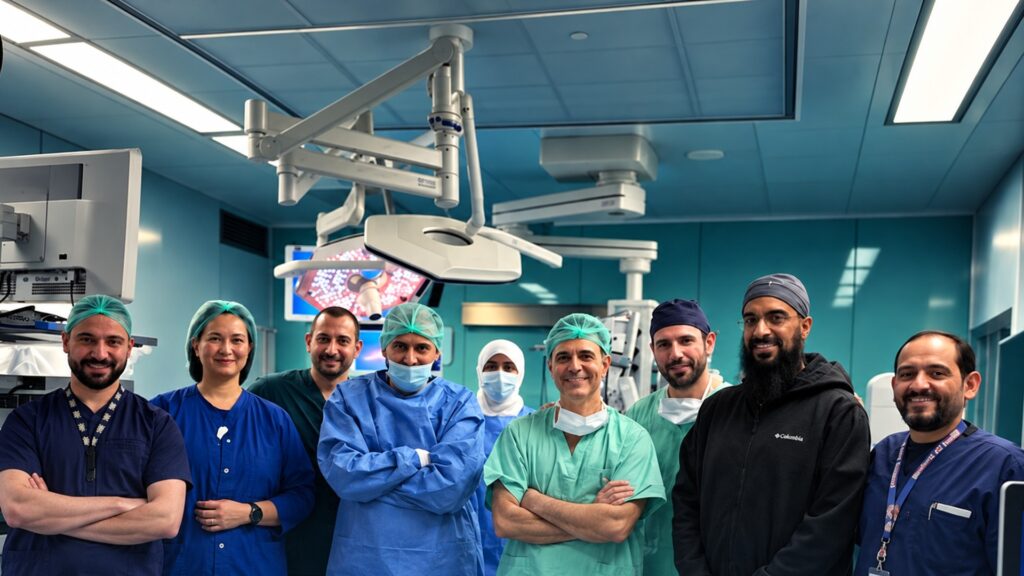
New Jahra Hospital’s robotic surgery programme has secured international accreditation, alongside individual recognition for Dr Mohammed Al-Jasmi. Its development brings together specialist training, earlier surgical accreditations and cooperation between Kuwaiti hospitals.
New Jahra Hospital has received Centre of Excellence in Robotic Surgery accreditation from the US-based Surgical Review Corporation, marking a new stage for a programme that began operating in April 2025.
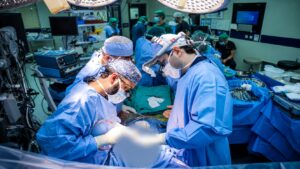
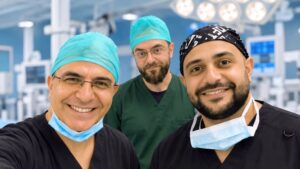
The Ministry of Health announcement, issued on 31 October, also confirmed that Dr Mohammed Al-Jasmi, the hospital’s head of surgery, received Surgeon of Excellence accreditation in robotic surgery for 2026–2029. The hospital has performed around 200 robotic operations across general surgery, urology and other specialist procedures.
The two designations recognise different parts of the service: the hospital’s programme and an individual surgeon. Together, they draw attention to the clinical organisation behind robotic surgery, including staff preparation, patient assessment, operating procedures and the collection of results. That wider system is central to understanding what the accreditation means for a public hospital serving Jahra.
A record across surgical specialties
The robotic surgery recognition follows earlier SRC accreditations at the hospital. In January 2024, the accreditor listed Jahra Hospital’s surgical department as a Centre of Excellence in Metabolic and Bariatric Surgery. Al-Jasmi was among the surgeons individually recognised in that announcement.
SRC subsequently named New Jahra Hospital a Centre of Excellence in Urology in its May 2025 announcements. These are separate, specialty-specific designations, establishing a documented history of external assessment before the latest robotic surgery award.
The programme performed its first robotic operation on 27 April 2025. A Ministry of Health account published by Kuwait News Agency in September 2026 recorded 155 procedures by 6 September. The latest announcement puts the cumulative total at approximately 200, around 18 months after the first operation. Those dated figures trace the programme’s activity as it moved from its initial cases towards accreditation.
Training before the first operation
Preparation preceded the launch. In a public account of the hospital’s training, Ahmad Al-Mujalhem reported that members of Jahra’s urology robotic team completed technical and procedural training at Orsi Academy from 7 to 10 April 2025. The course covered Medtronic’s Hugo robotic-assisted surgery system, and his account acknowledged Al-Jasmi’s support.
That timetable places the training within the same month as the hospital’s first robotic procedure. It also provides a specific example of the preparation undertaken by one of the specialties participating in the programme.
Robotic-assisted surgery remains directly controlled by a surgeon. As the US Food and Drug Administration explains, these systems allow a surgeon to move instruments through small incisions using computer-assisted controls. A console provides a view of the surgical field and control over the instruments. The equipment does not independently decide how to perform an operation.
Clinical exchange has continued alongside the programme. Visiting surgeon Antonio Arroyo described a visit with Luis Sánchez-Guillén at the invitation of the ministry and Al-Jasmi. His account records participation in two complex colorectal operations using Hugo and two lectures at the first Hugo RAS Gulf Summit of Robotic Surgery.
Arroyo also acknowledged the hospital’s nursing coordination, surgical assistance and technical support. His description gives a practical view of the range of roles involved when visiting specialists work alongside a local robotic surgery team.
What the accreditation assesses
SRC’s published robotic surgery requirements extend across the patient’s care. They cover surgical credentials, programme leadership, supporting clinical services, equipment and documented staff training. They also require standardised pathways for care before and after surgery and at discharge.
Patient education and informed consent form part of that framework, alongside a process for selecting procedures appropriate to each patient’s condition. Participating teams are expected to continue their education, while applicants must collect prospective outcomes data in SRC’s database or another qualifying system.
For patients, these requirements concern the arrangements surrounding an operation: who is qualified to perform it, which services support it, how care is coordinated and how results are recorded. The accreditation therefore addresses the organisation of the surgical service as well as experience with the equipment.
SRC describes its assessment process as a combination of document submission, medical chart review, interviews and a facility assessment. Applicants have an opportunity to address deficiencies identified during that process. After accreditation, maintaining the designation requires continuing compliance, with site inspections every three years.
These published rules explain the framework within which the award operates. They also make follow-up part of the accreditation cycle, connecting the initial assessment with the programme’s subsequent work.
Connecting surgical teams across Kuwait
Jahra’s programme is part of a wider public-sector development. In a September 2026 KUNA report, Ministry of Health Undersecretary Sheikh Dr Salman Khalifa Al-Sabah described robotic surgery across several Kuwaiti hospitals. Sheikh Jaber Al-Ahmad Hospital’s programme began in 2019 and had reached 1,145 procedures by 4 September 2026.
Cooperation has also linked Jahra and Jaber directly. In October 2025, Jaber’s gynaecological oncology unit and Jahra’s obstetrics and gynaecology department conducted three remote robotic procedures for patients with uterine cancer. The cases illustrate how specialist teams have worked across hospital locations within Kuwait.
Al-Sabah’s account placed training, equipment maintenance and supporting infrastructure within the same investment decision. He also said assessments of recovery and hospital stays should compare outcomes by procedure and patient condition against alternative approaches.
For Jahra, the new designation now sits alongside its earlier bariatric and urology accreditations and a growing record of robotic procedures. Under SRC’s framework, the continuing task includes recording outcomes, maintaining staff training and returning for periodic assessment. That makes the programme’s accumulating clinical record, alongside its operation count, a continuing part of the accreditation process.