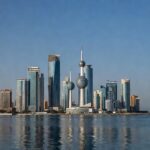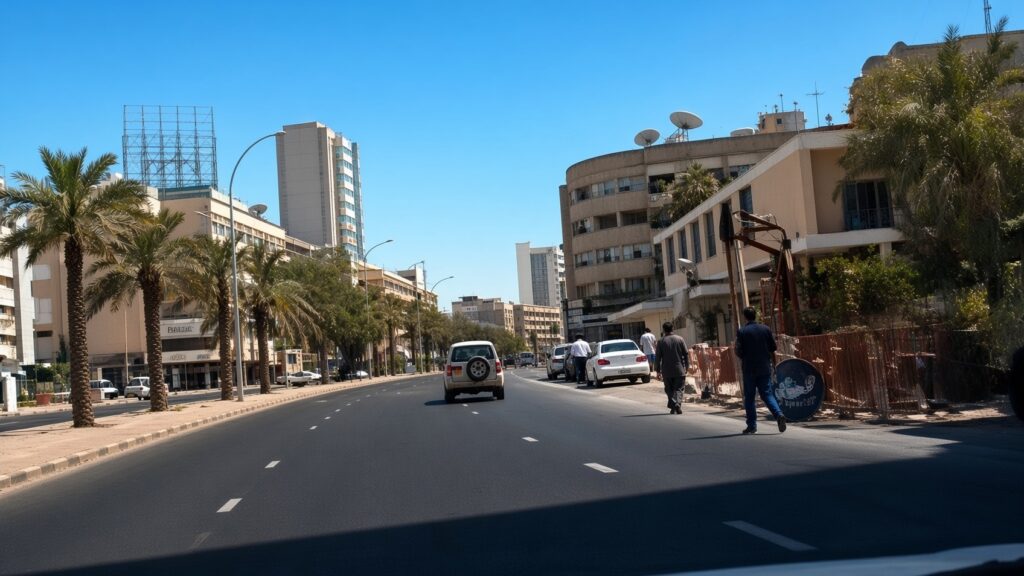
By the year 2000, Kuwait had completed a remarkable national rebuilding. Nine years after liberation, homes, roads, hotels, ports, and oil facilities were working again. Life in the capital and districts such as Mishref had a settled, everyday rhythm. Amateur film from June 2000, later shared online as a city drive from Mishref, shows wide avenues, coastal views, hotels including the Le Meridien, and people going about ordinary summer days—an informal record of a country that had restored itself with its own resources and determination.
Oil underpinned a strong decade. After prices recovered from the late 1990s, production and export earnings rose. Nominal GDP climbed from about $38 billion in 2000 toward $60 billion by 2004 and more than $80 billion by 2005. Real growth in 2003 and 2004 averaged around 8.5 percent. The state recorded large budget and current-account surpluses, continued to set aside funds for future generations, and launched reforms aimed at broadening non-oil activity and expanding opportunity for citizens. The Kuwaiti dinar remained among the world’s strongest currencies, and living standards for nationals stayed high.
The workforce that supported this growth was large and international. By the mid-2000s the population was approaching three million. Citizens and expatriates together kept shops, hospitals, construction, services, and the oil industry running. Government policy emphasized jobs for young Kuwaitis alongside a modern, open economy that welcomed skill and investment. Private airlines such as Jazeera Airways (2004) and later Wataniya added to connectivity. Trade links with a changing Iraq after 2003 added another source of regional activity.
Civic life advanced as well. Sheikh Jaber al-Ahmad al-Sabah provided continuity until 2006; Sheikh Sabah al-Ahmad then assumed the emirship in an orderly family succession. In 2005 parliament approved women’s right to vote and stand for office, and the first woman cabinet minister, Massouma al-Mubarak, was appointed. Women voted in a municipal contest in 2006 and took part in that year’s parliamentary elections. The National Assembly remained an active forum, a distinctive feature of Kuwaiti public life in the Gulf.
The cityscape of the early 2000s reflected completed reconstruction and careful planning from earlier decades: ring roads, waterfront parks, hotels, and established suburbs. Later in the decade, planning rules began to allow more intensive building in the centre, setting the stage for the next generation of projects. Compared with the raw years immediately after 1991, 2000 already looked like a finished, livable capital—something viewers of period footage still notice with affection.
Kuwait closed the decade as a high-income oil state with restored infrastructure, rising national income, expanding civic participation, and a clear sense of continuity. The 2000s were the years when recovery turned into ordinary prosperity—and when the country carried that prosperity into the new century.