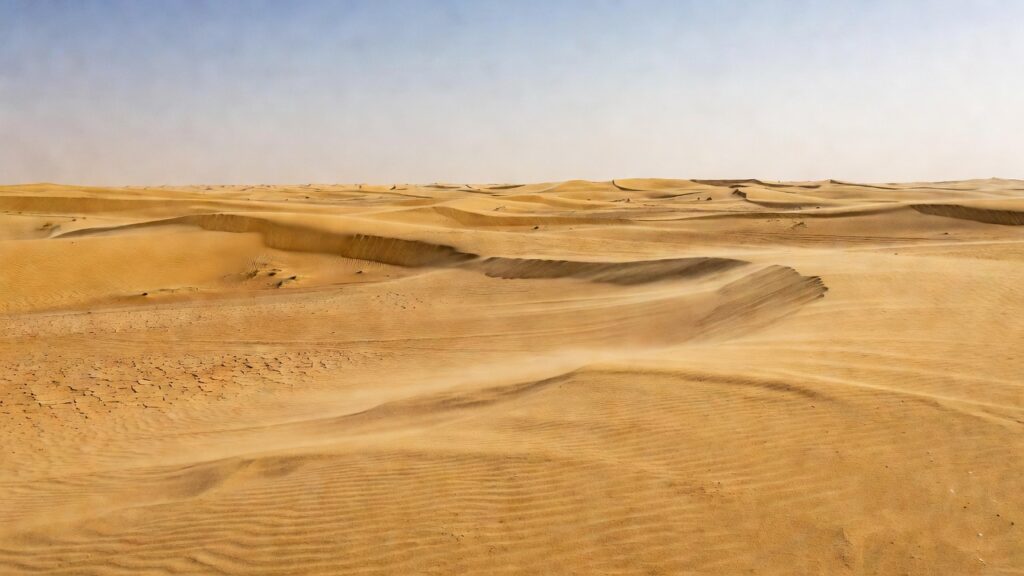
Kuwait’s Meteorology Department said Wednesday that dusty conditions will gradually improve as northwesterly winds weaken with visibility expected to improve overnight after dropping to around 1,000 meters. Acting Director Dharar Al-Ali told the Kuwait News Agency that unstable weather since Tuesday morning stemmed from a surface low-pressure system and hot air mass that intensified winds beyond 60 kilometers per hour on June 17 2026.
The Meteorology Department indicated that wind speeds would decrease gradually allowing dust levels to subside by the early hours of the night. Forecasts for Thursday call for hot daytime temperatures reaching 40 degrees Celsius and warm nights. Light to moderate northwesterly winds of 10 to 30 km per hour are anticipated according to the department’s update. Al-Ali’s statement to KUNA underscored the need for motorists and residents especially in open areas to exercise caution until conditions fully improve.
A weather watch for fresh wind and dust was active on June 17 from 9 a.m. until 5 p.m. according to the Kuwait Meteorological Center. The alert warned that winds might exceed 50 km/h causing rising dust and reduced visibility particularly over open areas with rough seas noted as well. The center’s forecast aligned closely with details provided by Al-Ali in his comments to the news agency. This type of watch forms part of routine extreme weather notifications issued by the department.
A 2023 study by B. Alahmad and colleagues found that Kuwait City receives more than 270 tons of dust per square kilometer per year. The research which examined fine particulate matter’s impact on daily mortality between 2001 and 2016 described this deposition rate as the highest recorded globally. Dust storms elevate PM2.5 levels and limit visibility according to air quality information published by IQAir. Such events introduce sudden changes in pollutant concentrations that can affect public health.
A separate study on the socioeconomic effects of dust storms in Kuwait analyzed increases in traffic accident rates and losses in oil exports when marine ports close. These disruptions occur alongside broader effects on daily economic activity in the desert environment. The Meteorology Department supplies five-day weather and marine forecasts twice daily in addition to advance warnings for dust storms. The Directorate General of Civil Aviation lists the department as Kuwait’s official source for such meteorological services and reports.
The Meteorology Department’s update carried by Arab Times focused on the expected overnight reduction in dust after Wednesday’s peak intensity. Similar northwesterly wind patterns have triggered comparable events in prior years lifting sand from exposed desert zones. No specific information on widespread flight delays or other major operational impacts appeared in the latest statement. Thursday’s forecast maintains the transition toward lighter winds after the current system passes.