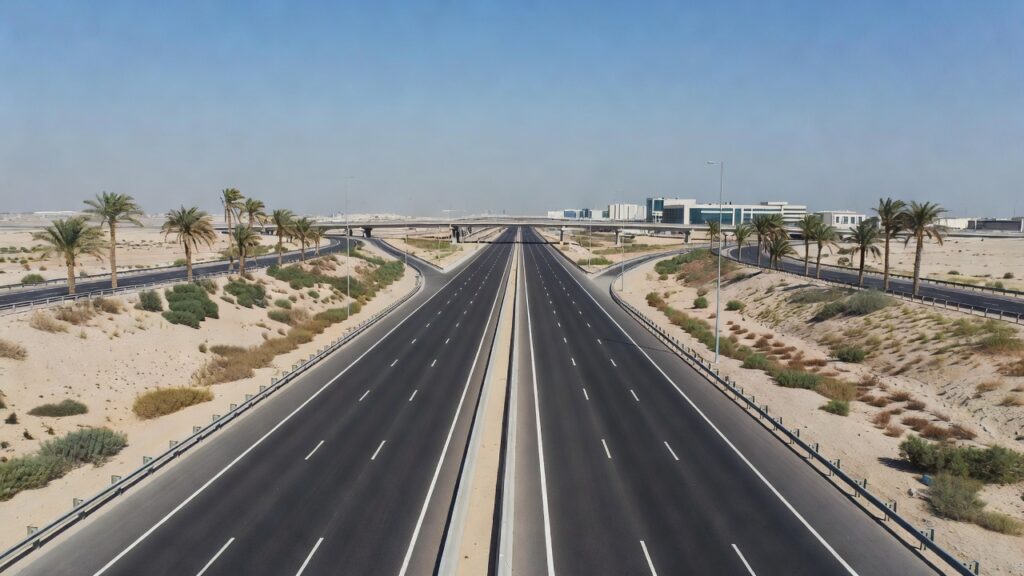
The General Directorate of Traffic issued an announcement detailing the temporary closure of a portion of King Faisal bin Abdulaziz Al Saud Road, also referred to as Riyadh Street, in the direction of the Kifan area. This closure is set to begin at dawn on Friday and continue through Sunday to allow for necessary infrastructure work along the busy corridor. The affected segment starts at the exit from the Second Ring Road that feeds onto Riyadh Street toward Kuwait International Airport and extends to Abdullah Ali Al-Mutawa Street, which forms part of the Third Ring Road. Officials stressed the importance of the maintenance to sustain road safety standards in the capital.
According to the directorate’s notice, all vehicles will be redirected to the Second Ring Road for the duration of the three days. Motorists have been advised to pay close attention to directional signs placed along the detour and to comply with any instructions from traffic personnel on site. Planning alternative paths in advance is recommended to reduce the likelihood of significant delays in and around the airport vicinity. The measure reflects the directorate’s ongoing efforts to balance development projects with minimal interference to daily travel.
Kuwait’s road infrastructure has seen multiple such temporary adjustments in recent years as the Ministry of Public Works advances its maintenance calendar. A review by the ministry highlighted that proactive repairs on major arteries like ring roads and connecting streets help mitigate long-term deterioration caused by heavy usage. Figures from the Central Statistical Bureau of Kuwait show that the number of registered vehicles in the country has grown, increasing pressure on the existing network.
The General Directorate of Traffic regularly coordinates with other agencies to time these closures during periods of lower traffic volume, such as weekends. This particular shutdown on Riyadh Street follows a pattern observed in earlier operations on Fifth Ring Road and Gulf Street, where similar diversions were implemented for asphalt laying and related upgrades. Such coordination ensures that projects are completed efficiently while keeping the public informed through official channels.
In addition to the immediate detour, the authority has called on the public to stay updated via official communications for any last-minute modifications to the plan. The closure does not affect the opposite direction of Riyadh Street, limiting the overall impact to one flow of traffic. Drivers heading to or from the airport during the period should factor in extra time for their trips.
Local authorities have echoed the directorate’s warning, reminding residents that adherence to the rerouting will contribute to smoother traffic conditions overall. Past experiences with comparable closures have demonstrated that early planning by commuters can significantly decrease congestion on alternative routes. The directorate’s proactive communication strategy has proven effective in managing public response to these necessary interruptions.