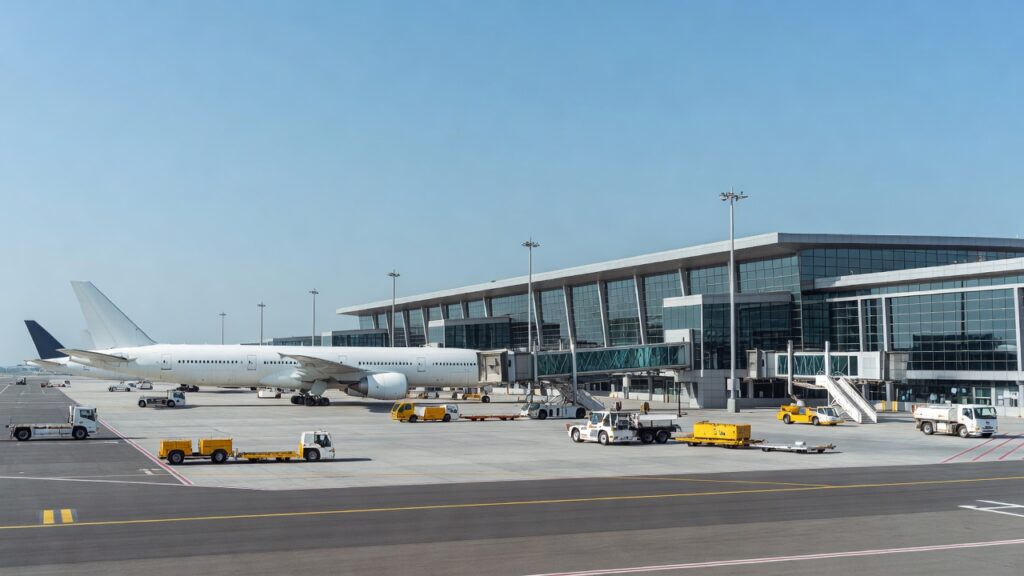
The General Authority of Civil Aviation will run 63 flights from May 20-23 to carry 8,400 pilgrims and staff to Saudi Arabia for the 2026 Hajj season from Kuwait International Airport’s Terminal 4, it announced on May 20. Return flights will operate on May 30-31, with passengers advised to arrive three hours early and limit luggage to one bag.
The authority’s statement confirmed that all operational and security preparations had been completed ahead of the season. Sheikh Engineer Hamoud Al-Mubarak said, “All operational and security preparations have been completed ahead of the season, aimed at facilitating the safe and efficient movement of pilgrims.” He added that the operational plan had been developed in coordination with multiple government bodies to ensure smooth travel procedures. Al-Mubarak urged pilgrims to follow all instructions and wished them a safe journey.
Saudi Arabia’s General Authority for Statistics (GASTAT) reported that the total number of pilgrims for the 2026 Hajj reached 1,707,301. External pilgrims made up 1,546,655 of the total, with 1,485,729 arriving by air, GASTAT figures show.
Kuwait’s quota for pilgrims was listed at 3,622 by World Population Review. The 8,400 transport total therefore includes a substantial number of administrators and support staff.
Historical records indicate that Hajj attendance averaged 2,269,145 annually between 2000 and 2019, according to compiled statistics. The 2026 figure of 1.7 million represents a stabilization following the disruptions of the COVID-19 period, when numbers fell to 10,000 in 2020. Air transport has consistently dominated as the primary mode of arrival for international participants.
Kuwait’s operation will utilize Kuwait Airways and other carriers for the dedicated Hajj flights, as detailed in aviation updates. The use of a separate terminal helps isolate the pilgrimage traffic from commercial flights at Kuwait International Airport. Service providers have prepared for the concentrated schedule spanning only four days for outbound travel.
Coordination with the Ministry of Interior and Ministry of Islamic Affairs ensured that all regulatory requirements were addressed in the plan. The General Administration of Customs will facilitate quick processing for the pilgrims upon departure. Such inter-agency collaboration has proven effective in prior Hajj seasons for managing large group movements.