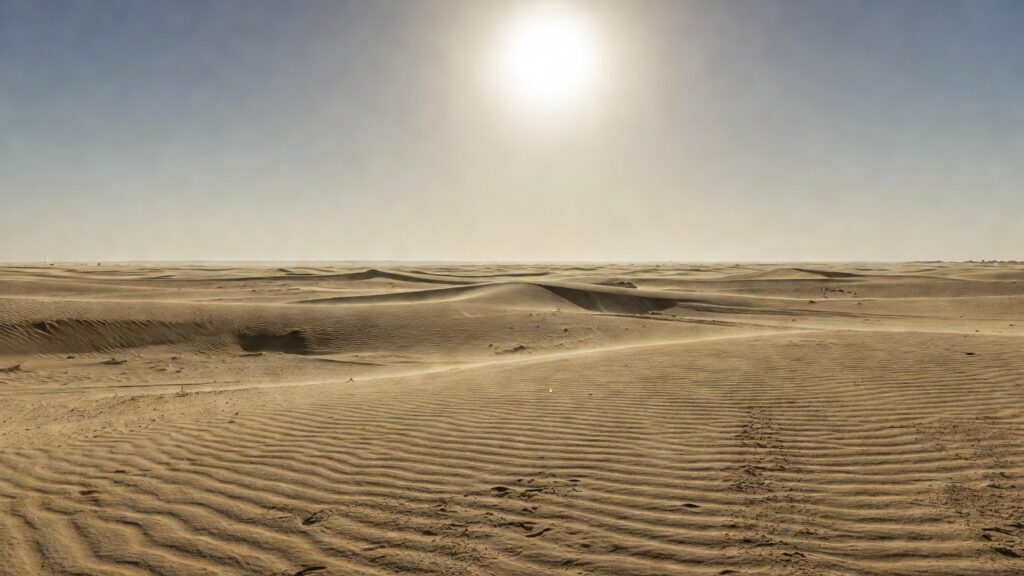
The Kuwait Meteorological Department warned Sunday that strong northwesterly winds exceeding 50 km/h are expected to stir dust and reduce visibility while very hot and humid conditions settle over Kuwait’s coastal areas, Arab Times reported on June 21, 2026. Sea waves may rise above six feet, leading to cautions for sea-goers, and the department forecast warm nights with winds of 10 to 38 km/h.
The department’s bulletin also indicated that winds during the day will be northwesterly to variable and light to moderate, fluctuating between 10 and 40 km/h with periods of increased activity. This forecast comes amid Kuwait’s prolonged summer season, which according to the Kuwait Meteorological Center typically brings average maximum temperatures of 45 to 46 degrees Celsius. The center has recorded an all-time high of 51.3 degrees Celsius at the international airport in 1998, providing context for the current 42-degree outlook.
A multi-day warning from the department extends the alert for rain, dust and frost from Tuesday through Friday, as detailed in the Arab Times coverage. Such extended forecasts help residents and authorities prepare for fluctuating conditions that can impact health and infrastructure. The combination of heat, humidity and dust is a recurring feature of Kuwaiti summers that requires ongoing vigilance.
Research on the burden of fine air pollution in Kuwait, a 2023 study by B Alahmad and colleagues published in PMC, found that intense dust storms combined with petrochemical industries significantly affect air quality and mortality rates in desert climates. The study underscores the health risks associated with particulate matter during events like the forecasted dust on Sunday and later in the week. Local health officials often advise sensitive groups to stay indoors when dust levels rise.
World Bank historical climate data for the period 1991 to 2020 reveal that Kuwait experiences increasing temperatures and shifting precipitation that can intensify the effects of dust storms across the region. These climatic trends have implications for public safety and economic activities, particularly in open desert areas. The data places the current weather pattern within a long-term trend of hot and arid conditions.
The northwesterly winds, locally referred to as shamal, are known to bring both cooling effects and dust according to the meteorological center’s climate description. In its Sunday update, the center reiterated the potential for rising dust with winds of 15 to 55 km/h on following days. Officials continue to provide regular updates to help the public manage exposure to these conditions.