A place among the world’s most-cited scientists brings fresh attention to a research career spanning bariatric surgery, diabetes and the collection of evidence from Kuwait’s hospitals.
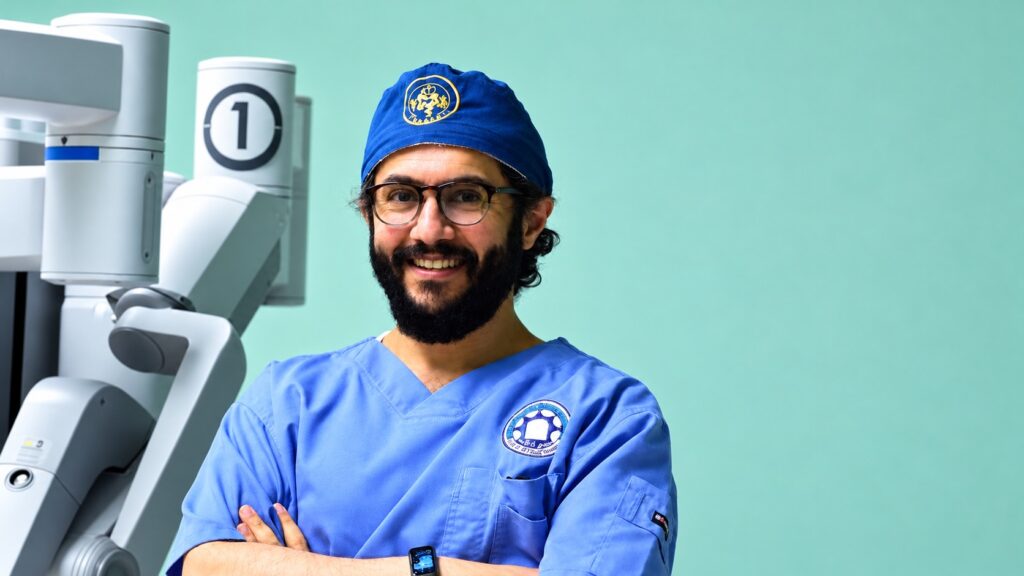
Sheikh Dr Salman Khalifa Al Sabah has ranked first among Kuwait-affiliated researchers in surgery in the 2026 Stanford–Elsevier database of the world’s top 2% of scientists, drawing attention to a body of work rooted in the country’s hospitals and medical institutions.
The Ministry of Health undersecretary placed 765th among 146,713 researchers classified in surgery worldwide, according to figures reported by the ministry on October 14. That position puts him at approximately the top 0.52% within his field in the reported annual ranking.
The recognition offers a reason to look beyond the number. His published work includes efforts to document bariatric surgery across Kuwait’s public hospitals, examine the characteristics of patients undergoing treatment and investigate the relationship between surgery and diabetes. These studies address questions that remain relevant long after an individual operation: who receives treatment, how their health differs and what happens during their recovery.
What the ranking measures
The 2026 database, published on October 7, was compiled by a team led by Stanford University researcher John Ioannidis using Scopus data. It brings together several measures of citation impact, including citations, the h-index and indicators that account for co-authorship and a researcher’s position in a paper’s author list.
Its purpose is to make research influence more comparable across scientific disciplines. The database separates career-long impact from citations received during a single recent year, with the latest annual figures covering 2025.
That distinction matters when interpreting the achievement. This is a ranking of scholarly influence, rather than a clinical assessment of individual surgeons or hospitals. It records how published research circulates through the scientific literature, where subsequent studies may use, examine or build on earlier findings.
For readers in Kuwait, the relevant connection is between that international visibility and the local evidence behind it. A national research contribution becomes easier to understand when it can be traced to identifiable studies, institutions and patient populations.
Building a record across Kuwait’s hospitals
One example is the first Kuwait National Bariatric Surgery Report, whose findings were published in BMC Surgery in 2020, with Dr Al Sabah listed as first author.
The study brought together 3,302 cases from six public hospitals, including 2,704 primary procedures. Sixty-three surgeons contributed to the data collection. Participating institutions included Al Amiri, Al Adan, Al Jahra, Al Sabah, Farwaniya and Mubarak Al Kabeer hospitals.
The resulting database recorded information on patients’ health before surgery, the procedures they underwent and their operative outcomes. Collecting those records across several institutions created a broader picture than an account from a single surgical department.
The distinction is practical. A hospital can describe its own experience, but a shared registry allows researchers to examine patterns across a wider group of patients and services. Using consistent definitions also makes it possible to compare findings and establish a baseline for subsequent reports.
The project therefore concerned more than publishing a set of surgical results. It created a structured record of practice in Kuwait that other researchers could examine and use.
Following the relationship between surgery and diabetes
A later paper by Dr Al Sabah and Eliana Al Haddad examined patients with and without type 2 diabetes using the second Kuwait National Bariatric Surgery Database Report. Published online in 2023 and appearing in a 2024 journal issue, the analysis drew on retrospective data from seven public hospitals.
Within that surgical population, 12.5% of patients had type 2 diabetes. They were older on average than patients without diabetes, with mean ages of 42 and 31.9 years respectively. Sleeve gastrectomy accounted for roughly four in five procedures in both groups.
The authors also reported differences in postoperative complications and highlighted the importance of postoperative care for patients with diabetes. These findings concerned the patients included in the study, rather than the prevalence of diabetes across Kuwait’s population.
This work illustrates the questions that a national database can support. Counting procedures establishes the scale of activity; examining patients’ characteristics and outcomes helps explain how the experience of surgery differs between groups. The research moves from describing what hospitals do towards understanding the people receiving that care.
A career connecting clinical practice and research
Dr Al Sabah’s professional background combines medical training in Kuwait with postgraduate training in Canada. An American College of Surgeons profile records his graduation from Kuwait Medical School, surgical residency at McGill University and fellowship training in minimally invasive and bariatric surgery.
The same profile describes his involvement in medical education and the mentoring of residents and students. It also identifies him as the founder and president of the Kuwait Surgical Association, placing professional training alongside his clinical and research work.
His more recent academic record extends beyond bariatric procedures. Kuwait University’s research portal lists work on long-term outcomes after sleeve gastrectomy, patient-reported measures of quality of life in obesity treatment, and legal and ethical questions surrounding telesurgery.
Separately, the Kuwait Foundation for the Advancement of Sciences research portal lists him as principal investigator on a completed Dasman Diabetes Institute project comparing drug treatment involving GLP-1/GIP-1 agonists with bariatric surgery in relation to insulin signalling, insulin resistance and lipid metabolism. The project listing establishes the research question, rather than a published conclusion about which treatment performs better.
Taken together, these records give substance to the latest recognition. The ranking measures the reach of published scholarship; the studies show some of the clinical questions behind it. For Kuwait, that connection is particularly tangible in the national surgical databases: evidence collected in local hospitals, assembled collaboratively and made available for scrutiny in the wider medical literature.